Saturday, November 13, 2010

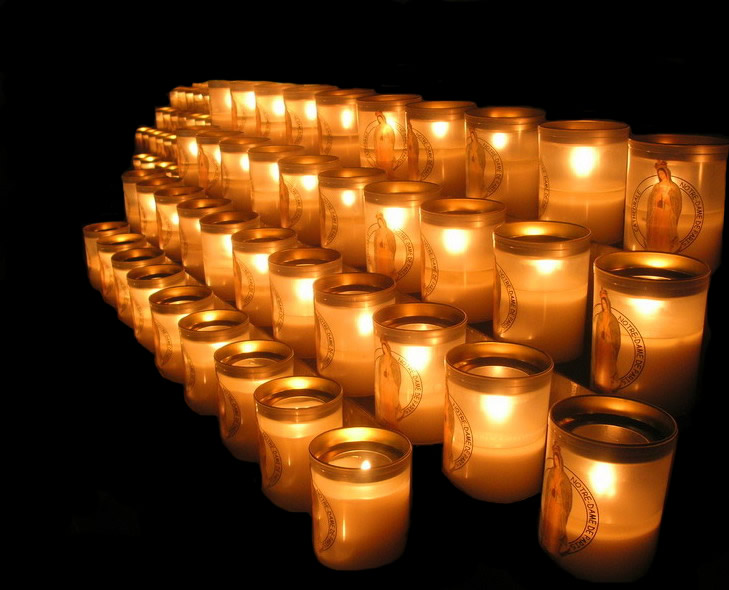
Reflection on Gifts of Life and Light (Br Jovita Ho)


In you is the source of life, and in your light we see light.” Psalm 36:9


Change. Sometimes we desire it, and sometimes we do not desire it. Yet sometimes even when we desire change, especially those that affects us externally, we tend to shrug it off or give up changing it, because it is just not worth the effort. Even if we pray for change, nothing may change much today. There is still the likelihood of us falling asleep during our prayers, meditation, lessons or work. There would also still be that wonderfully irritating person whom we rather not encounter as well. Despite all the good intentions on our part to change, nothing seems to change, as a matter of fact; all seems to remain the same.


“In you is the source of life, and in your light we see light.” This particular verse in Psalm 36 is something which I have prayed over many times during Divine Office, and yet if we see its message, it is simply amazing. “In your light we see light” simply means that only when God who is light, gives us light, would then thus enable us to behold all things in light. Imagine if there is no light coming from your natural surroundings, or if there isn't any of idea of light, this article would not be able to be written nor read. “In your light, we see light!”


We may not be able to change the surroundings, the situations or even the brother or sister whom we encounter, but we can encounter all these through the light of our eyes which is given us by God the Father. Let us pray that the Lord of light will cast His light on all that and all whom we encounter, so that we too may be a source of life and light to those who are gifted to us and whom we are gifted to.


~~~~~~~~~~~~~~~~~~~~~~~~~~~~~~~~~~~~~~~~~~~~~~~~~~

Stay tuned for the next post by Br Peter Anthoney on 15th Nov 2010.

Thursday, November 11, 2010

Reflection on Grandeur, Intimacy and Humility (Br Gregory Chan)

Those of us who read Church History are simply intrigued by the study of the Renaissance, especially about the Medici: Godfathers of the Renaissance.


In the very first hour we watched, fascinated at how the Architect Brunelleschi designed and built the Dome of the Cathedral of Florence. Hundreds of years before, the Emperor of the Eastern Roman Empire, Justininan commissioned another architectural wonder, the Hagia Sophia, which was constructed from a series of domes, with its highest and biggest raised twenty-one feet above the others. These architectural feats show how man wanted to honour God, and wasted no time and effort in constructing magnificent, lofty, edifices where they could worship Him in His house.

Psalm 121 opens joyously:
“I rejoiced when I hear them say:
‘Let us go to God’s house.’”

God’s house was therefore something awesome and grand. However, what we have learnt in the Gospel of John, is that the message is not about a particular location, it is about a relationship, an intimate relationship. Indeed, Psalm 129: 5 - 6 speaks of this intimacy:

“My soul is waiting for the Lord,
I count on his word.
My soul is longing for the Lord
more than watchman for daybreak.”

Finally, in the Canticle in Phil 2: 6 – 8, we encounter Jesus, who, above all the symbols of power, might and majesty, chose to die powerless:

“Though he was in the form of God,
Jesus did not count equality with God a thing to be grasped.

He emptied himself,
taking the form of a servant,
being born in the likeness of men.

And being found in human form
He humbled himself and became obedient unto death,
Even death on a cross.”


Let us then contrast these three symbols of grandeur, intimacy and humility. Let us therefore pray that we be humble, inviting the people of God to cultivate genuine intimacy with God, so that we may give glory and honour to the Body of Christ. With these thoughts in mind, let us pray.
~~~~~~~~~~~~~~~~~~~~~~~~~~~~~~~~~~~~~~~~~~~~~~~~~~

Stay tuned for the next post by Br Jovita Ho on 13th Nov 2010.

Tuesday, November 9, 2010

Reflection on St Charles Borromeo (Br Edward Seah)


When I was reflecting on the life of St Charles Borromeo, somehow I was reminded, to some extent, of St. John Baptist De La Salle, the Founder of the Lasallian Schools.

St. La Salle was born in Rheims in France while St. Borromeo was from Arona, Italy. It seems to me that both life stories may not be as interesting to children as compared to the life of St. Francis of Assisi. But they are certainly very inspiring for the adults.

Both Saints La Salle and Borromeo lost their fathers while they were still young and had to take responsibility in the management of their family affairs which would include looking after their younger siblings. This must have prepared them for heavier responsibilities and commitment as required of them later on. Both had their studies disrupted for a while but were able to continue later on leading to doctoral degrees.

St. La Salle’s maternal family, the Moet, were well known vineyard owners while Borromeo’s maternal family was the powerful Medici from Florence. Both men had uncles who supported their involvement in the Church by providing exposures to some of the church’s offices. Saints La Salle and Borromeo became priests, though the latter eventually became the Archbishop of Milan.

It was significant that both observed or experienced abuses in the church and responded by serving the Lord with all their might. St La Salle accepted his bishop’s ban on celebrating mass publicly and so continued focusing on his ministry of providing education to the young, especially the poor, and with the formation of teachers. St. Borromeo on the other hand believed that abuses in the church arose from clergy ignorance and swung into action by establishing seminaries, colleges and communities for the education of candidates for holy orders. As Archbishop of Milan, he was credited in the re-organising of diocesan administration; calling of provincial and diocesan synods, made regular and systemic pastoral visits; opened a seminary entrusted to the Jesuits and to the Oblates of St Ambrose. He also promoted religious renewal in his archdiocese.

As I reflected on their lives, I realized that both Saints La Salle and Borromeo were single-minded and very mature in their faith. They did not allow the weaknesses and sins of the church to destroy their faith and zeal in working for God. Instead they focused solely on doing God’s will, spreading God’s grace as they toil from place to place. In the end, they made a difference in the lives of many.

~~~~~~~~~~~~~~~~~~~~~~~~~~~~~~~~~~~~~~~~~~~~~~~~~~

Stay tuned for the next post by Br Gregory Chan on 11th Nov 2010.

Sunday, November 7, 2010

Reflection on Psalm 51 (Br Benedict Chng)

Every Friday morning throughout the year we pray Psalm 51. This psalm was composed at different moments in the history of Israel. It was finally fixed during the exile of the Israelites or immediately after their return from Babylon when the feeling of their own guilt was still strong. They saw their sins against Yahweh had been the cause of all their sufferings, especially their experience in exile. Thus, Israel wants to assume all the infidelities of its own history – particularly David’s sin with Bathsheba – until that caused their exile and the destruction of the holy city would be forgiven.

Let us remember that Jesus also took upon himself all our sins and Himself became sin for us. In Order to destroy in His own body, the sin of man.

As church, we are the body of Christ in this world. Hence in union with the universal church, let us seek pardon and mercy for our sins. In prayer, let us assume as our Lord did in His Passion, the sins of the world, interceding for all men with Jesus before our Father as we pray our Psalm.

~~~~~~~~~~~~~~~~~~~~~~~~~~~~~~~~~~~~~~~~~~~~~~~~~~

Stay tuned for the next post by Br Edward Seah on 09th Nov 2010.

Friday, November 5, 2010

Reflection on Psalm 62 (Br Alphonsus Dominic)


"Challenges in our Faith Journey
"

About a month ago, I met a parishioner who is a social service counsellor. She shared with me that the recent statistics for the number of people committing suicide or going into depression and being admitted into the Institute of Mental Health had both increased. It was found that majority of the cases falls into two particular categories, either financial difficulties or relationship problems apart from the others.

We all have a fair share of experiences with the difficulties of life but psalm 62 challenges us to look back at these difficulties and dark moments of our lives, when we felt that everything that can go wrong went wrong! How did we handle these situations? Did we bravely endure all the torrents of life or did we fall apart and lose our peace of mind and our faith?

The psalmist reminds and encourages us to completely place our trust in our God, not only with our eternal lives but also with our daily lives. Let us praise and glorify Him for past victories as well as for the victory over our current situation. Deep down in our hearts, let us with perfect trust in our God’s ability to deliver us out of any threats for He is all loving and has a special relationship with us His children.

~~~~~~~~~~~~~~~~~~~~~~~~~~~~~~~~~~~~~~~~~~~~~~~~~~

Stay tuned for the next post by Br Benedict Chng on 07th Nov 2010.

Wednesday, November 3, 2010

Reflections on Life beyond life (Br Samuel Lim)


Yesterday marks the end of what I call the "Triduum of the Dead." On Sunday night, the secular world partied with the dead among the living – it was Halloween. On Monday, the Church celebrated the Solemnity of All Saints – where we rejoice with our brothers and sisters who are already in heaven. And on Tuesday, yesterday, the Church commemorated all the faithful departed who are still undergoing purification – commonly known as All Souls’ Day. Of course, my reflection here concerns only the last two days.

It is interesting to note that the Church places these two celebrations side by side. What we celebrated on All Saints’ Day is actually the future of those souls whom we remembered on All Souls’ Day, since we believe that the souls of those undergoing purification in purgatory will eventually end up as saints in heaven. Here’s the official teaching of the Church: “All who die in God's grace and friendship, but still imperfectly purified, are indeed assured of their eternal salvation; but after death they undergo purification, so as to achieve the holiness necessary to enter the joy of heaven.” [CCC 1030]

So why do we pray for the faithful departed? To ensure their entry into heaven? No, because as mentioned, their salvation is already assured. To ‘shorten’ their stay in purgatory? Possibly, but who are we to determine their readiness to enter heaven? And who are we to bargain with God on their length of stay in purgatory? Anyway, strictly speaking, none of us sinners can claim that we qualify for entry into the perfect and spotless Kingdom, as the Psalmist says: “If you, O Lord, should mark our guilt; Lord, who would survive?” [Ps 130:3] The fact that anyone is allowed a period of purification in purgatory is purely due to the grace and mercy of God. So who is to complain?

Therefore, when we pray for the souls who have gone before us, we're just like the spectators of a race cheering for the runners and reminding them that their final destination is just around e corner. We’re here to remind them of the abundant love of God for them and His eagerness to welcome them into His Kingdom.

While we're busy cheering for them, let us not forget that we too are running our own race – our journey on earth. And the beauty is that, just as we cheer for the souls in purgatory, the saints in heaven are cheering for us at the same time. These saints are the “many witnesses in a great cloud all around us,” as mentioned in the Letter to the Hebrews. Indeed, they are the witnesses of true faith and examples of faithfulness in the Lord. And just as we, in our prayers, urge the faithful departed to let go of all their earthly attachments in order to embrace God completely, these saints too are encouraging us to be free of all sins and everything that prevents us from running this race of earthly life.
__________________________________________________

“With so many witnesses in a great cloud all around us, we too, then, should throw off everything that weighs us down and the sin that clings so closely, and with perseverance keep running in the race which lies ahead of us.”
[Heb 12:1]


__________________________________________________

This is the beauty and the dynamics of the Communion of Saints where all of us “who are pilgrims on earth, the dead who are being purified, and the blessed in heaven, all together forming one Church” [CCC 962] continue to encourage, love and pray for one another. How privileged we are to be part of this living Church of Christ!

~~~~~~~~~~~~~~~~~~~~~~~~~~~~~~~~~~~~~~~~~~~~~~~~~~

Stay tuned for the next post by Br Alphonsus Dominic on 05th Nov 2010.

Monday, November 1, 2010

A reflection on the Solemnity of All Saints Day (Br Joseph Zhang)

Longing – Enduring – Celebrating

It is becoming quite frequent and common that we come across TV programs and news featuring awards or medals giving. In the newspapers we often read about awards for the best singer, the best director, the best actor and actress. There are also the gold, silver, and bronze medals for the athletes. All the contestants have the same longing and the same goal that is to be the winner, to be the best.


In order to be the winner, they go through all kinds of difficult trainings and skill practices. Motivated by their goal to win, they are able to endure all the hard labours.

When they finally reap the harvest of their hard labours and become the winners, they rejoice and celebrate; they sing the songs of victory and joy.

Today we celebrate the solemnity of All Saints Day. These saints, when they were on earth, they longed only for one goal that was to win the crown of glory from God, to be united with God.

Similar to the earthly contestants who endure all kinds of hard trainings to win the corporate awards and medals, these saints endure all kinds of difficulties, trials, and persecutions to achieve their final goal. The trials become endurable for them because of their dream to win the spiritual award from God.


These saints, whose feast we celebrate today, have run their spiritual race and have won the spiritual contest. They are crowned with glory by God and are now living in the presence of God. They are singing songs of praise to God.


The three elements of longing, enduring, and celebrating in winning the spiritual award is well reflected in psalm 62, the canticle of Daniel, and psalm 149. Psalm 62 expresses the psalmist’s longing for God, the Canticle shows us that the three young men could endure the heat of the furnace because their eyes were fixed upon God in heaven, and the psalmist of psalm 149 sings a new song to the Lord.

Let us rejoice for the saints, let us rejoice with the saints. Let us emulate the saints by directing our whole lives and activities completely towards God.

~~~~~~~~~~~~~~~~~~~~~~~~~~~~~~~~~~~~~~~~~~~~~~~~~~

Stay tuned for the next post by Br Samuel Lim on 03rd Nov 2010.